
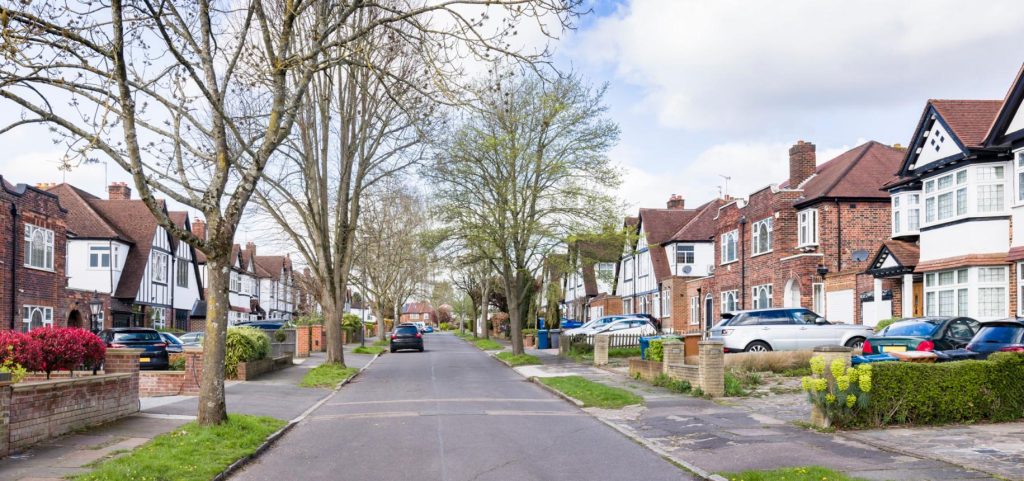
Barking and Dagenham is often spoken about as though it were one place, but the borough contains several distinct neighbourhoods, each with its own character.
Barking town centre, Barking Riverside, Becontree, Dagenham East and the streets surrounding Dagenham Heathway all offer different property and lifestyle choices.
You will find historic buildings, traditional family homes, enormous interwar housing estates and some of London’s most ambitious new residential developments. It is an area with deep roots, strong communities and a great deal of change taking place.
Barking and Dagenham Property Market
The Office for National Statistics recorded an average house price of £376,000 in Barking and Dagenham in July 2026.
This represented an annual increase of 5.3% from the revised average of £357,000 recorded in July 2025. Over the same period, the average house price across London fell by 3.3%.
Average prices in Barking and Dagenham varied considerably by property type:
- Detached properties: £664,000
- Semi-detached properties: £495,000
- Terraced properties: £410,000
- Flats and maisonettes: £252,000
Semi-detached homes recorded the strongest annual movement, with the average price rising by 6.9%. Flats and maisonettes experienced a smaller increase of 2.9%.
These figures cover the entire borough. They do not represent the precise value of a home in Barking town centre, Becontree, Dagenham East or Barking Riverside.
The value of an individual property will depend on its location, condition, size, transport connections and immediate surroundings.
First Time Buyers in Barking and Dagenham
First time buyers paid an average of £360,000 for a home in Barking and Dagenham in July 2026.
This was 5.2% higher than the revised average of £342,000 recorded in July 2025. People moving from one home to another paid an average of £422,000 in the borough.
Barking and Dagenham can provide first time buyers with a broader range of property choices than many parts of London.
Anyone considering an apartment should look carefully at the remaining length of the lease, service charges, ground rent, building management and any major works planned.
Renting in Barking and Dagenham
The average monthly private rent in Barking and Dagenham reached £1,698 in August 2026.
That represented an annual increase of 2.6%, from £1,655 in August 2025. Rental prices across London rose by 3.5% during the same period.
Average monthly rents by number of bedrooms were:
- One bedroom: £1,377
- Two bedrooms: £1,721
- Three bedrooms: £1,899
- Four or more bedrooms: £2,519
Average rents also varied by property type:
- Flats and maisonettes: £1,614
- Terraced properties: £1,852
- Semi-detached properties: £1,974
- Detached properties: £1,884
A single borough-wide average can only tell part of the story. The rent achieved by an individual property will depend on its size, condition, location, energy performance, transport connections and presentation.
The Office for National Statistics published these figures on 16 September 2026. The July 2026 house price figures remain provisional and may change as more transactions complete.
Local housing figures also draw upon fewer transactions than national estimates, so short-term movements require careful interpretation.
View the official Barking and Dagenham housing data
Living in Barking and Dagenham
Life in Barking and Dagenham tends to feel practical and grounded.
Barking has a busy town centre and one of the borough’s most useful transport interchanges. Dagenham offers a more suburban setting, with established residential streets, local shopping areas and houses with gardens.
Barking Riverside feels different again. This developing neighbourhood beside the River Thames includes contemporary homes, schools, community facilities and a London Overground station.
Your preferred location will depend on whether you value transport, outdoor space, a traditional house, a modern apartment or proximity to schools and everyday amenities.
Location
The London Borough of Barking and Dagenham sits in East London. It stretches from the River Thames in the south towards Chadwell Heath and Marks Gate in the north.
Newham, Redbridge and Havering border the borough, while the River Roding forms part of its western boundary.
Its position provides connections towards central London, Canary Wharf, Stratford, Essex and other parts of East London.
Transport options vary across the borough, so buyers and tenants should look closely at the individual neighbourhood and its nearest station.
Barking
Barking combines a busy town centre with older residential streets, new developments and an important historic centre around Barking Abbey.
The District line, the Hammersmith and City line, National Rail services and the London Overground all serve Barking station.
Shops, supermarkets, cafés and everyday services surround the town centre. Further out, Victorian and Edwardian terraces, later family housing and modern apartment developments create a more residential atmosphere.
New development continues to reshape parts of Barking, particularly around the town centre and riverside.
Dagenham
Dagenham has a more residential and suburban character.
During the 1920s, the London County Council developed the Becontree Estate to provide families with more space, light and access to gardens.
That history remains visible throughout Dagenham’s long residential streets and distinctive interwar houses.
Industry also played an important role in shaping the area. The growth of the Ford works influenced local employment, housing and community life throughout much of the twentieth century.
Today, Dagenham includes established family neighbourhoods, shopping areas around Dagenham Heathway and quieter streets closer to Dagenham East.
Barking Riverside
Barking Riverside is one of London’s largest new residential developments.
Developers are creating a new neighbourhood on former industrial land beside the River Thames. Plans include homes, schools, shops, community facilities and public spaces.
Barking Riverside station opened in July 2022 and connected the development to the London Overground network. Passengers can travel directly to Barking and continue towards other parts of London.
The station also provides access without steps.
Construction continues across Barking Riverside. Anyone considering moving there should understand what developers have completed, what remains under construction and how the immediate surroundings may change.
Property in Barking and Dagenham
Barking and Dagenham offers a varied property market.
Barking has period terraces, purpose built flats, family houses and an increasing number of modern apartments. Homes close to Barking station may suit buyers and tenants who place transport and convenience high on their list.
Dagenham is particularly well known for its interwar housing across the Becontree Estate. Many of these homes have gardens and can provide more space than an apartment closer to central London. Barking Riverside offers newer apartments and houses within a neighbourhood that continues to evolve. Post war estates, modern developments and pockets of older housing can also be found throughout the borough.
Buyers should consider more than the asking price. The condition of the property, remaining lease, service charges, ground rent, parking, transport connections and nearby development plans can all influence whether a home represents good value.
Transport and Connectivity
Transport is one of the borough’s strongest practical advantages, although the available connections depend on where you live. The District line, the Hammersmith and City line, National Rail and the London Overground serve Barking station. The District line also serves Becontree, Dagenham Heathway and Dagenham East stations.
Barking Riverside station provides London Overground services, while the Elizabeth line serves Chadwell Heath station near the borough’s north eastern boundary. Local buses connect the different neighbourhoods. However, travelling across the borough can take longer than the map suggests.
Before choosing a property, test the actual journey you will need to make rather than relying only on the distance to the nearest station.
Parks and Outdoor Space
Barking and Dagenham has more green space than many people expect. Barking Park offers open space, sports facilities and places for families to spend time outdoors.
Eastbrookend Country Park covers more than 84 hectares of restored landscape. It forms part of the Dagenham Corridor, which also includes The Chase Local Nature Reserve, Beam Valley Country Park and Beam Parklands.
Close to Barking town centre, Abbey Green provides outdoor space around the historic remains of Barking Abbey. Together, these parks give residents somewhere to walk, exercise and enjoy nature without leaving the borough.
History and Heritage
The present borough came into existence in 1965, when Barking and Dagenham joined to form the London Borough of Barking. The council adopted the name London Borough of Barking and Dagenham in 1980. Its history reaches much further back.
Saint Erkenwald founded Barking Abbey in around 666. It later became one of the most important religious communities in the country. Visitors can find the surviving ruins beside Saint Margaret’s Church in Barking.
During the medieval period, Barking Abbey controlled much of the land across Barking, Dagenham and Ilford through the Manor of Barking.
Valence House now serves as the borough’s local history museum. Its collections tell the story of the area, including the creation of the Becontree Estate and the lives of the people who shaped the community. The expansion of Becontree and the growth of the Ford works transformed Dagenham from a largely rural district into an important part of metropolitan London.
Shops, Culture and Everyday Life
Barking town centre provides shops, supermarkets and a wide range of everyday services. Dagenham Heathway serves as another important shopping area for the surrounding neighbourhoods. Smaller parades and local shopping areas sit throughout the borough.
The Broadway Theatre in Barking presents performances and community events. Valence House gives visitors an opportunity to explore local history. The Women’s Museum in Barking celebrates the stories and experiences of women and girls from Barking and Dagenham and beyond.
Independent restaurants, cafés, bakeries and food shops reflect the diversity of the borough’s population.
Schools and Family Life
Families can choose from primary and secondary schools across Barking and Dagenham, together with nurseries, colleges and local services. Every child and family will have different priorities. School admissions arrangements, catchment areas and performance can also change.
Parents should therefore check the latest information directly with the school and the local authority before choosing a property. Family houses, gardens, parks and transport connections make several parts of the borough worth considering for people who need more space.
Regeneration and Future Development
New development is changing parts of Barking and Dagenham, but buyers should not treat regeneration as a guarantee of future property growth.
Barking Riverside provides the clearest example. Plans for this large riverside site include thousands of homes, schools, public spaces and community facilities. Developers are also bringing new homes and investment to Barking town centre and other parts of the borough.
Regeneration can improve transport, public spaces and local amenities. However, it can also bring years of construction and continued change. Before buying, investigate the plans surrounding the property. Check what has planning permission, what developers have completed and what remains only a proposal.
Is Barking and Dagenham a Good Place to Live?
The answer will depend on the lifestyle and property you want. Barking may suit people who value transport connections and a busy town centre. Dagenham offers established residential streets and traditional family houses. Barking Riverside provides modern homes within a developing neighbourhood beside the Thames.
The borough offers useful transport connections, green spaces and a broader choice of property than its reputation sometimes suggests.
Understanding the individual neighbourhood is essential. Barking and Dagenham is far too varied to judge as one single location.
Buying, Selling or Letting in Barking and Dagenham
If you are considering buying, selling or letting a property in Barking and Dagenham or the surrounding areas, Properly Partners Lee Wheatley and Sally Hollis can help.
Lee and Sally cover Barking, Dagenham and the surrounding parts of East London and Essex. They offer personal service, straightforward advice and support throughout the entire process.
Whether you are preparing to sell, searching for your next home or looking for help with a rental property, you will work directly with an experienced estate agent who takes the time to understand what matters to you.
If you are letting or managing a property, you can also read our guide here: