
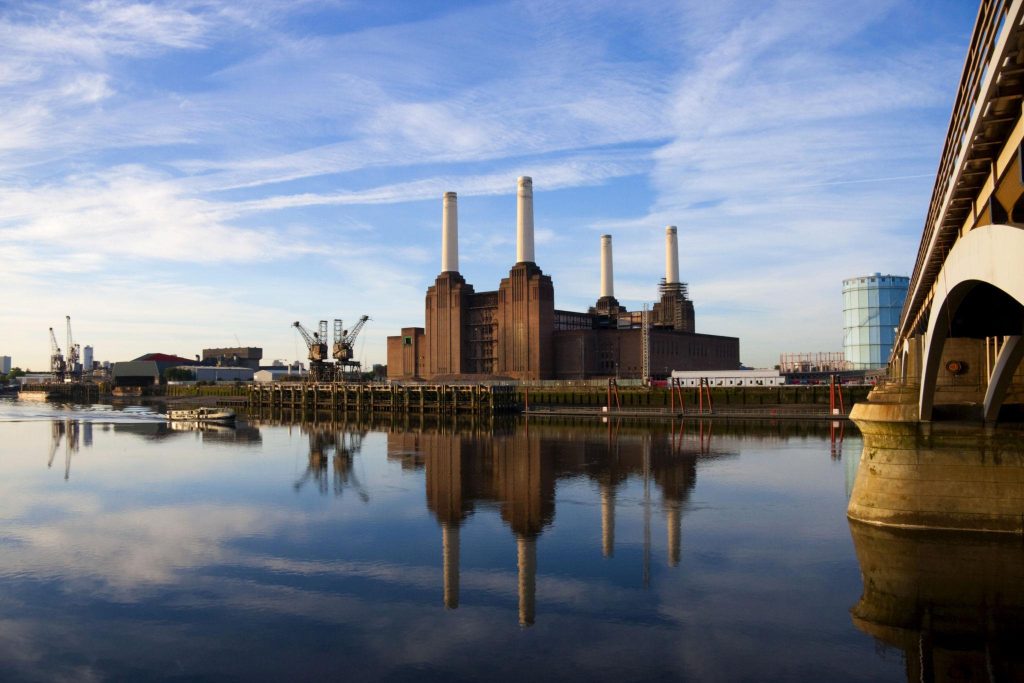
Battersea and Nine Elms offer two rather different versions of London living within the same part of the capital.
Battersea is established, varied and full of contrasts. It has Victorian streets, riverside developments, traditional neighbourhoods, railway arches, busy shopping areas and one of London’s best-known parks.
Nine Elms feels newer and more architectural, with contemporary apartment buildings, landscaped public spaces and the redeveloped Battersea Power Station at its heart.
Together, they offer an interesting mixture of old and new. You can walk from a traditional Battersea street to the River Thames, continue through Battersea Park and arrive among the restaurants, shops and modern buildings surrounding the Power Station.
Living in Battersea and Nine Elms
Battersea and Nine Elms appeal to people who want to remain close to central London while having access to the river, green space and a growing collection of shops, restaurants and local amenities.
Nine Elms has changed particularly quickly. What was once an industrial area is now home to new housing, offices, public spaces and two London Underground stations.
The wider Battersea area has a more established residential character. Its neighbourhoods include Victorian streets, mansion blocks, modern riverside developments, council estates and family houses.
Life can feel quite different depending on whether you are close to Battersea Park, Clapham Junction, Battersea Square, Northcote Road or the newer developments around Nine Elms and the Power Station.
Location
Battersea is a large district in the London Borough of Wandsworth, approximately three and a half miles south-west of Charing Cross. It extends along the south bank of the River Thames, opposite areas including Chelsea and Pimlico.
Nine Elms sits towards the north-eastern side of Battersea, between Battersea Park and Vauxhall.
The river plays an important part in the identity of both areas. Chelsea Bridge and Albert Bridge provide connections towards Chelsea and central London, while the Thames Path offers a riverside route through a part of London that has changed enormously in recent years.
Two areas with different characters
It would be misleading to describe Battersea and Nine Elms as though they were one uniform neighbourhood.
Battersea has a long-established identity and a wide variety of streets and property. Some parts feel traditionally residential, while others retain reminders of the area’s industrial and railway history.
Nine Elms is more contemporary. Modern apartment buildings, new public spaces and large developments have transformed the skyline and created an area that feels planned and architectural.
Battersea Power Station provides a natural focal point, but Nine Elms is still developing. That can be exciting for buyers and tenants who enjoy modern surroundings, although anyone considering a property should understand what construction or future development may be planned nearby.
The history of Battersea
The Domesday Book first recorded Battersea in 1086, although much of the area remained agricultural for centuries.
Local farmers grew produce for London, including lavender around what is now Lavender Hill and asparagus known as “Battersea Bundles”.
Industry developed along the River Thames from the eighteenth century onwards. The river provided transport, water and access for factories, mills, wharves and other industrial businesses.
Battersea’s population grew rapidly during the nineteenth century as housing, railway infrastructure and industry expanded across the area.
Much of that industry later declined or moved away. Former industrial land, particularly along the river, has since made way for housing, offices, shops and public spaces.
Battersea Power Station
Battersea Power Station is one of the most recognisable buildings on the London skyline.
Construction of the first part began in 1929. Work took place in two stages, eventually creating the building’s famous four-chimney appearance.
The first section stopped generating electricity in 1975, and the second closed in 1983. Its designation rose from Grade II listed status in 1980 to Grade II* in 2007.
For many years, the Power Station stood empty while different redevelopment proposals came and went. Restoration eventually began, and the main building opened to the public in October 2022.
Today, the Power Station contains shops, restaurants, leisure venues, office space and homes. Electric Boulevard provides a pedestrianised route between the development and Battersea Power Station Underground station.
The building’s industrial character has not disappeared entirely. Its scale, brickwork, chimneys and original design remain central to the identity of the development.
Property in Battersea and Nine Elms
Property varies considerably across Battersea and Nine Elms.
Modern apartments dominate the market in Nine Elms and around Battersea Power Station. These range from smaller homes to substantial riverside apartments and penthouses.
Many developments offer facilities such as concierge services, residents’ lounges, gyms, gardens and shared working areas. Service charges can be significant, so buyers should understand exactly what is included and how the charges may change.
The wider Battersea market is much more varied. It includes Victorian terraces, period conversions, mansion flats, purpose-built apartments, family houses, housing estates and modern developments.
Location can make a considerable difference. A period house near Battersea Park offers a very different lifestyle from a new apartment in Nine Elms, even when the two properties have a similar price.
Sellers and landlords need to present and market each property to the right audience. Buyers and tenants looking for a modern building with facilities are not necessarily making the same decision as somebody searching for a characterful home on an established residential street.
Battersea and Nine Elms property market
The Office for National Statistics publishes official property information for the wider London Borough of Wandsworth. These figures cover more than Battersea and Nine Elms, so they provide useful context rather than a valuation of an individual property.
The provisional average house price in Wandsworth was £686,000 in July 2026. This was 5.5% lower than the revised figure of £726,000 recorded in July 2025.
First-time buyers paid an average of £579,000, which was 5.9% lower than the previous year.
Average prices by property type were:
- Detached homes: £2,496,000
- Semi-detached homes: £1,345,000
- Terraced homes: £971,000
- Flats and maisonettes: £527,000
Private rents across Wandsworth averaged £2,632 per month in August 2026. This represented an annual increase of 4.2%.
Average monthly rents by number of bedrooms were:
- One bedroom: £1,938
- Two bedrooms: £2,463
- Three bedrooms: £2,810
- Four or more bedrooms: £3,818
These figures reveal an important difference between the sales and rental markets. Average sale prices across Wandsworth were lower than a year earlier, while average rents continued to rise.
Local property data draw on fewer transactions than national data, so the figures can change noticeably from one month to the next. The Office for National Statistics may revise the house price figures as further completed sales enter the records.
What the property figures really mean
Borough-wide averages cannot tell you what a particular Battersea or Nine Elms property is worth.
The market will value a modern apartment with river views, outside space and building facilities differently from a period flat or family house farther from the river.
The remaining lease, service charge, ground rent arrangements, building management, fire safety documentation and planned major works may all affect the appeal and saleability of an apartment.
Buyers should also consider how many similar apartments are available in the same building. If several comparable properties reach the market at once, buyers may have more choice and negotiating power.
Good presentation remains important, but sensible pricing and a clear understanding of the competition matter just as much.
Transport and connectivity
Transport connections improved significantly when the Northern Line extension opened on 20 September 2021.
The extension created two step-free London Underground stations in Zone 1, one at Nine Elms and another at Battersea Power Station.
Transport for London reported that the extension reduced average journey times between the area and the City of London and the West End by approximately seventeen minutes.
Battersea Park, Queenstown Road and Clapham Junction railway stations also serve the area.
Clapham Junction provides services across London and towards destinations in southern and south-western England. Battersea Park railway station offers connections to London Victoria and other destinations.
The best station will depend on exactly where you live. Battersea covers a wide area, so it is important to check the actual walking route rather than relying only on the name of the neighbourhood.
Battersea Park and outdoor life
Battersea Park is one of the area’s greatest assets.
This 200-acre Victorian park dates from the nineteenth century and runs alongside the River Thames.
It includes a riverside promenade, lake, mature trees, ecological areas, children’s play spaces, sports facilities, a gallery and a children’s zoo.
Residents use the park to walk, run, cycle, exercise or simply escape the surrounding city for a while.
The Thames Path and newer riverside spaces around Battersea Power Station and Nine Elms provide further opportunities for walking. However, the character of the outdoor space changes as you move through the area. Battersea Park feels mature and established, while much of Nine Elms feels newer and more formally landscaped.
Shops, restaurants and local culture
Battersea Power Station has become a significant shopping and leisure destination, with restaurants, cafés, shops, events and entertainment within and around the restored building.
Electric Boulevard adds further shops and places to eat between the Power Station and the Underground station.
The wider Battersea area offers a different kind of local life. Battersea Square, Battersea Park Road and the streets around Clapham Junction provide independent businesses, restaurants, cafés, pubs and everyday shops.
Northcote Road is known for its shops, cafés, restaurants and market. It sits towards the south-western side of Battersea and will not be within a short walk of every property in the area.
Battersea Arts Centre occupies the former Battersea Town Hall and provides theatre, performances and community events.
This mixture gives Battersea more depth than a neighbourhood built entirely around new development.
Schools and family life
A growing number of families live in Battersea and Nine Elms, but the experience varies depending on the part of the area you choose.
Battersea offers established residential streets, parks, nurseries and schools. Nine Elms provides modern homes and improving local facilities but may feel less traditional as a family neighbourhood.
Anyone moving because of a particular school should check the current admissions criteria directly with the school or local authority. Admissions arrangements and priority areas can change, and living nearby does not automatically guarantee a place.
Families considering a modern apartment should also think carefully about storage, outside space, service charges and how the home will work as their needs change.
Daily life in Battersea and Nine Elms
Daily life depends greatly on which side of the area suits you.
Nine Elms may appeal if you value modern design, building facilities, riverside walks and quick access to the Northern Line.
The wider Battersea area may suit someone looking for established streets, period architecture, local shops and easy access to Battersea Park or Clapham Junction.
Neither experience is necessarily better. They are simply different, and understanding that difference is important when deciding where to buy or rent.
Why people choose Battersea and Nine Elms
People choose Battersea and Nine Elms for the central location, transport connections, River Thames and access to Battersea Park.
Some are drawn to the convenience and facilities of a modern apartment. Others want the character and community of an established Battersea street.
The area also offers the unusual combination of a major London regeneration project sitting beside neighbourhoods with a much longer history.
For buyers, the amount of choice makes careful research particularly important. For sellers and landlords, success depends on understanding what makes an individual property stand out from the competing homes around it.
Buying, selling or letting in Battersea and Nine Elms
If you are considering buying, selling or letting in Battersea or Nine Elms, Properly can help you understand the local market and how buyers or tenants are likely to respond to your property.
If you own a rental property and would like to understand the costs and responsibilities involved, read our property management cost guide.
Whether you are planning a move, considering letting your property or would simply like an informed conversation about its current value, please contact Properly.
Sources
Wandsworth housing prices and rents from the Office for National Statistics
Battersea history and local information
Battersea Power Station history
Battersea Park information from Wandsworth Council
Northern Line extension information from Transport for London