
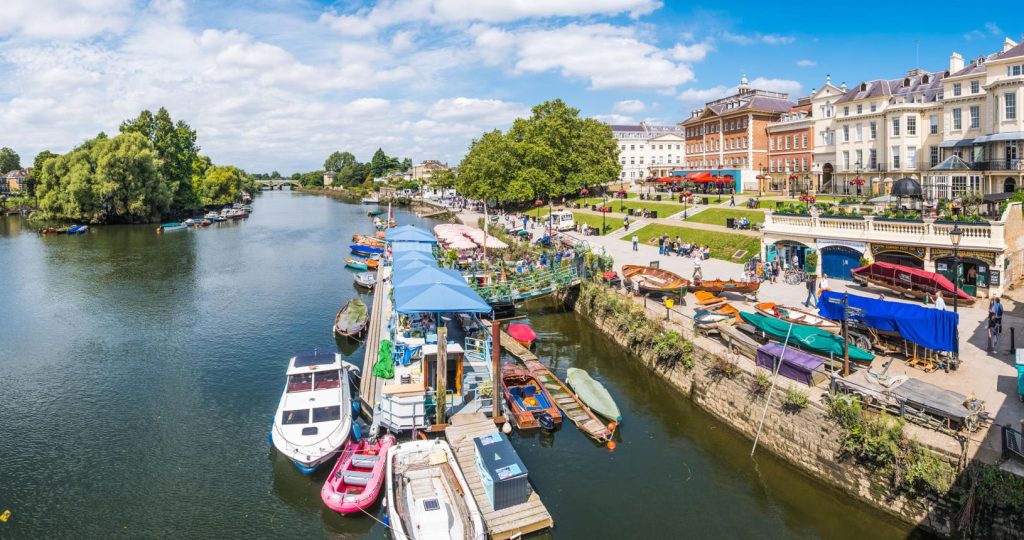
Richmond is one of those rare places where London and the countryside seem to meet.
The River Thames curves around the town, Richmond Park provides an extraordinary amount of open space, and the historic centre feels established without being stuck in the past. You can walk beside the river, browse independent shops, have lunch overlooking the water and still travel directly into central London.
Richmond attracts families, professionals, international buyers and people looking for a long-term home. It offers handsome architecture, excellent transport connections and a strong sense of local identity. It is easy to understand why so many people arrive in Richmond and decide to stay.
Richmond Property Market
Property in Richmond commands a premium, but buyers have considerable choice. According to the Office for National Statistics, the average property price across the London Borough of Richmond upon Thames was approximately £803,000 in July 2026. This was 0.8% lower than the revised average of £810,000 recorded in July 2025.
During the same period, the average London property price fell by 3.3%. Richmond upon Thames remained one of the most expensive London boroughs in which to buy a home.
These are borough-wide averages and should not be treated as a valuation for an individual Richmond property. Prices can differ significantly according to the street, condition, size, outdoor space, parking and proximity to the river, park or station.
Richmond Property Prices by Property Type
The average property prices recorded across Richmond upon Thames in July 2026 were:
- Detached homes: £1,815,000
- Semi-detached homes: £1,192,000
- Terraced homes: £916,000
- Flats and maisonettes: £487,000
The figures also show how different parts of the market can move in different directions. Over the year, the average price of a detached property increased by 2.4%, while the average price of flats and maisonettes fell by 3.1%.
That is why a single headline figure rarely tells the full story. A well-presented family house near Richmond Park will attract a very different group of buyers from a modern apartment or period conversion closer to the station.
First-Time Buyers and Home Movers
The average price paid by a first-time buyer in Richmond upon Thames was approximately £636,000 in July 2026. This was 1.5% lower than the revised figure of £646,000 recorded one year earlier.
Home movers paid an average of approximately £965,000. These figures highlight the range within the local market. Although Richmond is an expensive place to buy, apartments, period conversions and smaller houses can provide different routes into the area.
Renting in Richmond
The average private rent across Richmond upon Thames was approximately £2,333 per month in August 2026. This represented an increase of 4.4% compared with the previous year and was almost identical to the London average of £2,332.
Average monthly rents by number of bedrooms were:
- One bedroom: £1,732
- Two bedrooms: £2,222
- Three bedrooms: £2,684
- Four or more bedrooms: £3,907
Average monthly rents by property type were:
- Flats and maisonettes: £2,045
- Terraced homes: £2,681
- Semi-detached homes: £3,036
- Detached homes: £3,957
These figures are averages for the whole borough. The rent achieved by an individual property will depend on its precise location, condition, presentation, size and facilities.
The Office for National Statistics produces these figures using completed property transactions and registered private tenancies. Local figures can change as further information becomes available, so the latest data should always be checked before making a property decision.
Living in Richmond
Richmond feels calmer than many parts of London, but it is certainly not sleepy. The town centre has shops, cafés, restaurants, theatres and everyday amenities. The river and surrounding green spaces give people somewhere to walk, run, cycle or simply slow down.
Daily life can involve a morning walk through Richmond Park, shopping in the town centre, lunch beside the Thames and an evening at the theatre. It offers plenty to do without feeling overwhelmed by the pace of central London.
Richmond’s Location
Richmond sits in south-west London within the London Borough of Richmond upon Thames. It is close to Kew, Twickenham, East Sheen and Petersham, while places such as Chiswick, Putney and central London remain easily accessible.
The town’s position beside the Thames shapes its character. The river is not simply a landmark. It forms part of everyday life, whether people are walking along the towpath, rowing, meeting friends or enjoying one of the riverside pubs and restaurants.
The Character of Richmond
Richmond has several distinct sides. The historic streets around Richmond Green feel elegant and established. Richmond Hill offers some of the area’s most desirable homes and celebrated views, while the riverside feels more relaxed and informal.
The streets surrounding the station provide easy access to transport and the town centre. Areas closer to Richmond Park appeal to buyers who want open space and a quieter residential setting.
This variety allows people to live differently within the same part of London. Someone looking for a period apartment close to restaurants may choose a completely different location from a family wanting a garden, parking and easy access to the park.
Richmond’s History
During the medieval period, the area now known as Richmond was called Shene, a name first recorded in the tenth century. After a fire destroyed much of Sheen Palace in 1497, King Henry the Seventh rebuilt it and named it Richmond Palace in 1501. The surrounding settlement gradually adopted the name Richmond, although both names continued to be used for some time
Richmond developed further during the eighteenth century. Richmond Bridge connected the two sides of the Thames, while Georgian houses and terraces appeared around Richmond Green and Richmond Hill.
The opening of Richmond railway station in 1846 made the area more accessible and contributed to its continued growth. Although much has changed, the town’s royal, riverside and Georgian history remains visible in its buildings and street layout.
Property in Richmond
Richmond offers an impressive variety of homes. You will find Georgian and Victorian houses, period cottages, Edwardian family homes, mansion flats, converted apartments and modern developments. There are also substantial detached and semi-detached properties in the wider area.
Homes near Richmond Green, Richmond Hill, the river and Richmond Park are particularly sought after. Properties close to the station also attract buyers and tenants who need regular access to central London.
Micro-location matters enormously. Two homes with similar floor areas can have very different values depending on their street, outlook, outside space, parking, condition and distance from transport.
For sellers, this makes an accurate valuation especially important. It is not enough to look at the price achieved by another home nearby without understanding how the properties and locations differ.
Transport and Connectivity
Richmond is particularly well connected. Richmond station provides mainline railway services to London Waterloo, along with London Underground District Line and London Overground services.
These connections make the town practical for people working across London. They also provide access to areas including Clapham Junction, Vauxhall, Hammersmith and central London.
Road connections towards the west and south-west of London are also convenient, although journey times naturally depend on traffic.
Richmond Park and Outdoor Life
Richmond Park is one of the area’s greatest assets. Its extensive parkland, woodland, walking routes and well-known deer make it feel remarkably removed from city life. People use the park for walking, cycling, running, horse riding and spending time outdoors.
The Thames provides another side to life in Richmond. Riverside paths connect the town with neighbouring areas and offer attractive routes for walking and cycling.
Richmond Green, the Old Deer Park and smaller local gardens provide further outdoor space. This combination is one of the main reasons the area appeals to people who want the convenience of London without giving up access to nature.
Food, Shopping and Culture
Richmond has a genuine town centre rather than simply a row of shops beside a railway station. George Street and the surrounding roads provide familiar retailers, independent businesses, cafés and restaurants. The smaller streets leading towards Richmond Green and the river have a more individual feel.
The riverside has several well-known pubs and places to eat, while the town centre provides plenty of choice for coffee, lunch and dinner.
Richmond Theatre and the Orange Tree Theatre contribute to the town’s cultural life. The area also benefits from cinemas, galleries, local events and easy access to attractions such as Kew Gardens.
Schools and Family Life
Richmond is extremely popular with families. The combination of established residential streets, green space, transport connections and a wide choice of schools supports consistent demand for family homes.
Anyone moving for a particular school should check its current admissions policy directly. Admission arrangements and priority areas can change, and living nearby does not automatically guarantee a place.
Families should also consider the practical details of daily life, including the school journey, childcare, public transport and access to outdoor space.
Why People Choose Richmond
Richmond offers the river, Richmond Park, historic architecture, a proper town centre and direct connections into central London. It feels peaceful without becoming isolated. There is a strong sense of place and a pace of life that feels noticeably different from more central parts of the capital.
There is also a sense of continuity. People often move to Richmond for a particular stage of life and remain because the area continues to work for them as their needs change.
Is Richmond a Good Place to Live?
Richmond will not suit every budget, but its appeal is easy to understand.
It offers green space, riverside walks, attractive architecture, cultural life and excellent transport connections. It is somewhere you can enjoy the advantages of London while having space to breathe. For many residents, that balance is what makes Richmond feel like home.
Buying, Selling or Letting in Richmond
If you are considering buying, selling or letting in Richmond or the surrounding area, Properly would be delighted to help.
Every property is different, and Richmond is a market where the individual street, presentation and pricing strategy can make a significant difference. We provide honest advice, personal service and experienced guidance throughout the process.
If you own a rental property, you can also read our guide to property management costs in the United Kingdom.
Sources
Property prices and private rental figures are from the Office for National Statistics, Housing prices in Richmond upon Thames, updated on 16 September 2026:
Office for National Statistics: Housing prices in Richmond upon Thames
Historical information was checked against:
The property figures relate to the London Borough of Richmond upon Thames rather than Richmond town alone. July 2026 property prices are provisional and may be revised by the Office for National Statistics.